
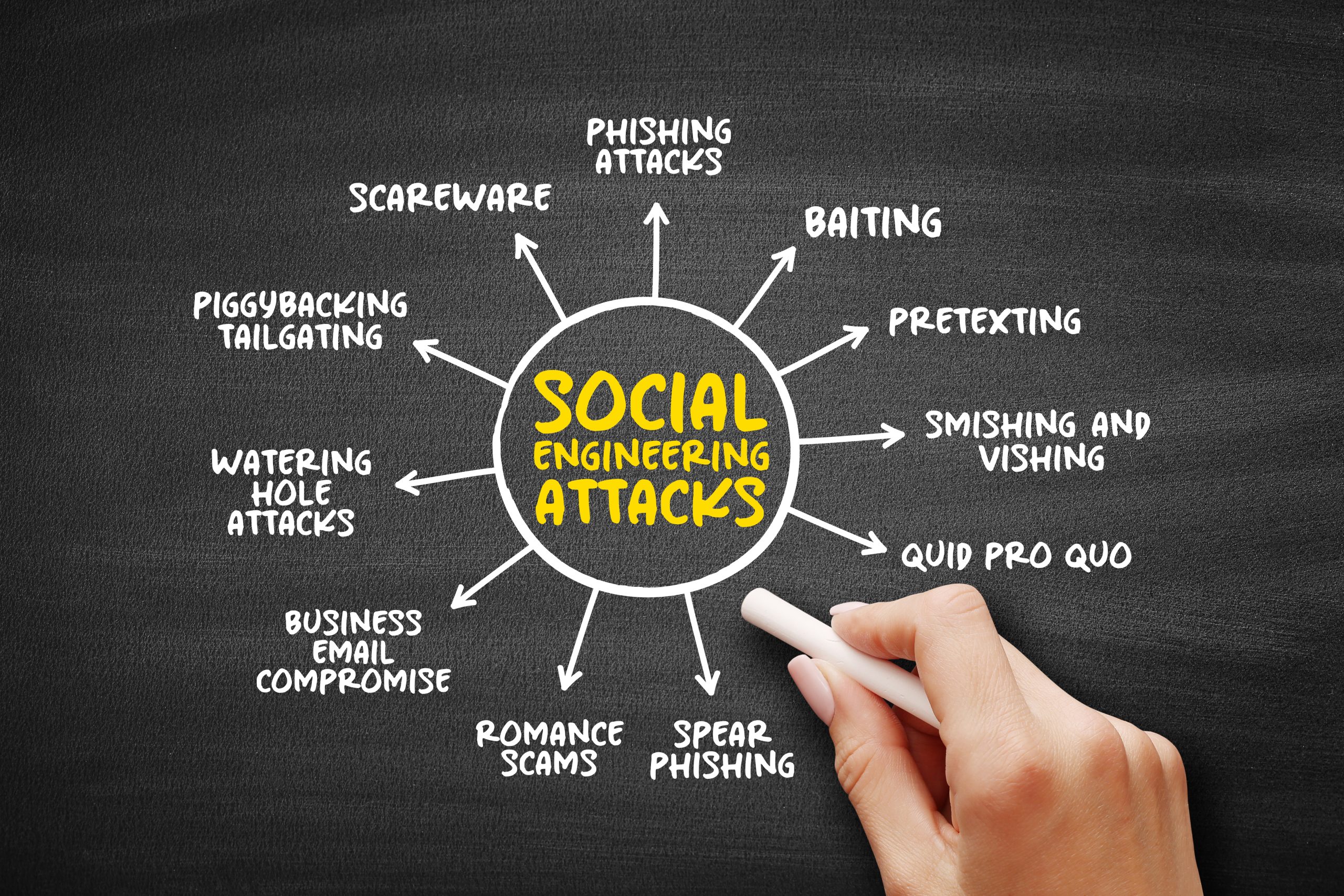
Many business leaders recognize phishing as a significant concern, but fewer realize the extent to which other forms of social engineering also threaten their daily operations. Attackers have grown far more creative, blending psychological manipulation with real-world interactions and digital deception. These tactics are effective because they focus on individuals rather than systems, making them more difficult to detect through automated tools alone. At Renascence IT Consulting, we help organizations strengthen their awareness and reduce weaknesses that criminals attempt to exploit. The first step is understanding what lies beyond phishing.
Reports continue to show this shift. Reports indicate that over 33% of recent social manipulation incidents have employed methods beyond traditional phishing. Their analysis reveals an increase in fake browser prompts, fraudulent help-desk interactions, and SEO exploitation attempts.
These findings highlight the rapid evolution of manipulation tactics. It also reinforces the importance of year-round training, coaching, and guidance that support IT employee awareness and everyday vigilance.
Understanding the Psychological Side of Manipulation
Many forms of social engineering succeed because people naturally want to be helpful, efficient, or accommodating. Attackers understand these instincts and tailor their approach to exploit human behavior. This blend of deception and persuasion is rooted in cyber psychology, where the focus is not on code but on the person behind the keyboard.
Criminals create scenarios that feel urgent or emotionally charged. They mimic authority figures. They fabricate problems that appear legitimate. They position themselves as someone who just needs quick assistance. These are the moments when employees, especially those who are busy, become vulnerable.
When we coach companies through IT security training, we help them recognize patterns rather than memorize single examples. The goal is to improve real-world judgment, not just theoretical knowledge. This is where preparation becomes valuable for overall SMB IT defense, because it strengthens the decision-making skills that matter during unexpected situations.
How Pretexting Works and Why It’s Effective
Pretexting relies on building a convincing story that encourages someone to share information or perform an action. Attackers often pose as vendors, team members, customers, or service representatives to gain access to sensitive information. They may reference a project, impersonate an invoice request, or claim they need credentials to resolve an issue.
The danger lies in how calm and familiar these interactions seem. They do not resemble obvious scams. They feel procedural, which is why employees often follow along without questioning the request.
The report indicates that 22% of external breaches have stemmed from non-phishing social engineering tactics, including manipulative phone calls, vishing conversations, or quid pro quo schemes.
The more awareness teams develop, the lower the chance of being misled by these scripted approaches. We support this level of preparation through our MSP security awareness programs and continuous coaching sessions, which are accessible to our clients.
Baiting, Curiosity, and Manipulation Tactics
Another threat vector that often goes unnoticed is baiting. Attackers use enticing offers, false alerts, or deceptive downloads to lure employees into action. This can involve harmful links, corrupted online files, or physical items left in office spaces. Curiosity is the trigger that leads someone to interact with something that appears harmless but is designed to compromise systems.
This method blends emotion and opportunity. People respond quickly when a link promises something valuable or urgent. These are the moments when cybersecurity threats escalate, because malicious content can execute silently.
We help clients reduce exposure by strengthening their MSP cyber defense posture through content filtering, safer browsing policies, and ongoing reinforcement inside training programs. Technology plays a role, but habits shape the majority of outcomes. Employees are the first line of defense, which is why IT employee awareness remains central to every cybersecurity program we support.
Tailgating and Physical Intrusion Risks
While many attacks occur online, physical intrusions also pose a serious risk. Tailgating happens when an unauthorized person follows an employee into a secure area. This could be someone holding a coffee cup, carrying a box, or walking confidently behind a staff member who has the door open. Many people don’t want to appear rude, so they avoid confronting the individual. Criminals count on that instinct.
Once someone is inside a restricted area, data, equipment, and internal systems become vulnerable to compromise. Tailgating also creates opportunities for planting malicious devices or stealing credentials. This is one of the oldest forms of social engineering, yet it remains effective because it blends with everyday office behavior.
We help our clients build better awareness and facility procedures, so these mistakes are less likely to occur. Incorporating physical security practices into IT security training enhances overall resilience.
Why SMBs Face Greater Risk
Small and mid-sized companies often struggle with limited resources, stretched teams, and fast-paced environments. These conditions create more opportunities for mistakes. Attackers are aware of this, which is why SMB cyberattacks have increased across multiple sectors.
SMBs depend on cloud platforms, collaboration tools, and mobile workflows, all of which introduce entry points. Social manipulation thrives when employees multitask or operate under pressure. Our work with local organizations often focuses on simplifying their security layers while improving awareness. This combination strengthens their SMB IT defense and reduces the chance of falling for everyday security tricks crafted to look routine.
How Training and Culture Reduce Social Engineering Success
Education plays a crucial role in addressing any form of social engineering. Employees perform better when they understand how manipulation works and know how to respond effectively. Strong training does not overwhelm with technical jargon. It focuses on practical judgment, pattern recognition, and confidence in slowing down when something feels suspicious.
A training program supporting MSP security awareness typically includes discussions around human behavior, communication processes, and how to identify emotional triggers. By incorporating cyber psychology, we help employees understand how criminals encourage rushed decisions. This awareness makes individuals far less susceptible to surprise requests or scripted scenarios designed to provoke immediate action.
Cultural reinforcement matters as well. When employees feel comfortable asking questions, reporting concerns, and verifying unexpected requests, the entire organization becomes less vulnerable to errors and mistakes. This is how training transitions from individual knowledge to company-wide strength.
For additional learning materials, many SMBs benefit from reviewing insights on cybersecurity awareness, which we maintain on our educational blog.
Reducing Exposure Through Managed Support
Adequate protection combines awareness, technology, and continuous improvement. Our work in MSP cyber defense focuses on layering these elements so businesses can operate without constant fear of manipulation attempts. We support clients by reviewing configurations, enhancing authentication controls, implementing safer communication pathways, and assisting teams in navigating suspicious interactions.
This effort is not about avoiding every threat. It is about preparing them realistically and sustainably. When employees understand security tricks, evaluate unfamiliar scenarios confidently, and know who to contact for guidance, the organization gains stronger protection from all sides.
Strengthening Your Defense Against Social Manipulation
Social manipulation threats continue to evolve. Phishing is only one part of the landscape, and non-phishing attacks are increasing in both frequency and complexity. By focusing on robust IT security training, awareness of deceptive behavior, and a culture that promotes verification, SMBs can significantly enhance their protection.
If your team wants to strengthen its response to social engineering, refine processes, or expand training programs, we can help. Our specialists support businesses through education, monitoring, coaching, and practical cybersecurity improvements that directly support your operational needs.
If you want guidance for improving your SMB IT defense, training your employees, or addressing recurring cybersecurity threats, contact Renascence IT Consulting.
At Renascence IT Consulting, we help organizations build safer environments, strengthen employee confidence, and enhance overall resilience against SMB cyberattacks and manipulation risks. Our focus is always on increasing awareness, reducing vulnerabilities, and supporting your path toward stronger protection.