
Co-Managed IT Services in Newark, CA
Strengthen your internal IT team with co-managed IT services in Newark, CA designed to provide additional expertise, tools, and support where you need it most.
Renascence works alongside your in-house IT staff to improve performance, enhance cybersecurity, and manage growing technology demands without taking away control.
What Is Co-Managed IT and How Does It Work?
Co-managed IT services are designed for businesses that already have an internal IT team but need additional support, expertise, or resources.
Instead of replacing your team, we work alongside them—handling complex tasks, strengthening security, and providing scalable support to improve efficiency and performance.

What’s Included in Our Co-Managed IT Services
Our co-managed IT services in Newark, CA are built to extend your internal IT team’s capabilities and improve overall system performance.
Supplemental IT Support
Additional resources to reduce workload and prevent team burnout.
Cybersecurity & Threat Protection
Advanced protection, monitoring, and compliance-ready systems.
24/7 Network & System Monitoring
Continuous oversight to detect and resolve issues before they impact operations.
Helpdesk & End-User Support
Fast, reliable support without overwhelming your internal team.
Strategic IT Consulting
Guidance on infrastructure, upgrades, and long-term planning.
roject Support & Implementation
Assistance with migrations, upgrades, and complex IT initiatives.
How Co-Managed IT Services Benefit Your Team
Co-managed IT services give your internal team the support and flexibility needed to operate more efficiently while maintaining full control.
Reduce Internal IT Workload
Free your team from routine tasks so they can focus on strategic initiatives.
Access Specialized Expertise
Gain support in cybersecurity, cloud, and infrastructure without hiring additional staff.
Improve Response Times
Resolve issues faster with additional support and monitoring.
Strengthen Security & Compliance
Enhance protection against cyber threats and regulatory risks.
Scale IT Support as Needed
Adjust support levels as your business grows.
Why Businesses Choose Renascence for Co-Managed IT in Newark, CA
Renascence goes beyond simple IT support—we become an extension of your team. Whether you need help managing growing IT demands, improving cybersecurity, or handling advanced networking challenges, we provide the expertise and resources to keep your business running efficiently.
- Collaboration, Not Replacement: We work with your IT staff, empowering them with additional expertise.
- Enterprise-Level Tools & Resources: Access cutting-edge IT solutions without the enterprise budget.
- Seamless Integration: We adapt to your workflows, making our support feel like an extension of your internal team.
- Cost-Effective IT Scaling: Expand your IT capabilities without increasing overhead costs.
- Clear & Simple IT Guidance: No confusing tech jargon—just practical solutions your team can execute.

Industries We Support in Newark and the Bay Area
Co-managed IT services are ideal for businesses that need specialized expertise while maintaining an internal IT presence.
- Robotics: Scalable IT support for automation, software integration, and security.
- Biotech Engineering: Secure and compliant IT solutions to protect sensitive research data.
- Architecture: IT infrastructure optimized for design software and seamless collaboration.
- Accounting: Reliable IT support to secure financial data and enhance productivity.
- Construction: IT solutions for on-site and remote teams, improving efficiency and communication.
Supporting IT Teams Across Newark and the Bay Area
Renascence provides co-managed IT services to businesses in Newark, Fremont, San Jose, Oakland, and surrounding Bay Area locations. Our local presence ensures fast response times and tailored IT support.
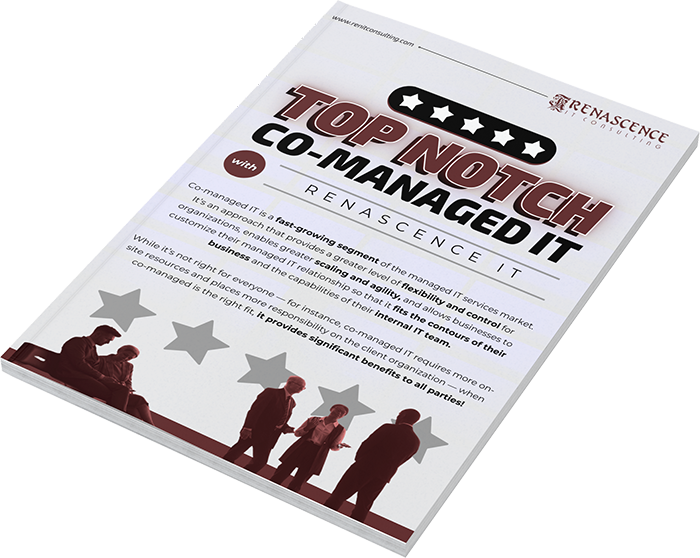
Co-Managed IT Forged for Flexibility and Growth
Strengthen your internal IT team without surrendering control. Download this FREE guide to discover how Renascence IT’s co-managed services deliver the agility, continuity, and expertise your organization needs to thrive.
Frequently Asked Questions About Co-managed IT Services
Will my internal IT team lose control?
No, your IT team remains in control. We work collaboratively, ensuring they have the resources and support they need.
How quickly can Renascence integrate with our IT team?
Our onboarding process is designed for a seamless transition, ensuring we integrate quickly and effectively with your existing IT operations.
How does co-managed IT benefit my business?
It fills gaps in IT expertise, enhances security, and provides scalable support without the cost of hiring more staff.
Is co-managed IT only for large businesses?
No, businesses of all sizes can benefit. Whether you need specialized expertise or extra hands for growing IT demands, co-managed solutions are flexible and scalable.
What makes Renascence a trusted co-managed IT provider?
We work as an extension of your team, ensuring seamless integration, expert support, and cost-effective solutions that align with your business goals.
STRENGTHEN YOUR IT TEAM IN NEWARK, CA
Support your internal IT team with expert co-managed IT services designed to reduce workload, improve security, and scale your capabilities as your business grows. Work with a partner that enhances your team’s performance without replacing them.
No obligation consultation
Response within 1 business day
Speak directly with an IT specialist
Solutions tailored to your business
Fremont, San Jose, Oakland, and across the Bay Area.